
All links to official websites of government agencies in the Kingdom of Saudi Arabia end with gov.sa.
All links to official websites of government agencies in the Kingdom of Saudi Arabia end with gov.sa.
Registered with the Digital Government Authority under number :
20250816746
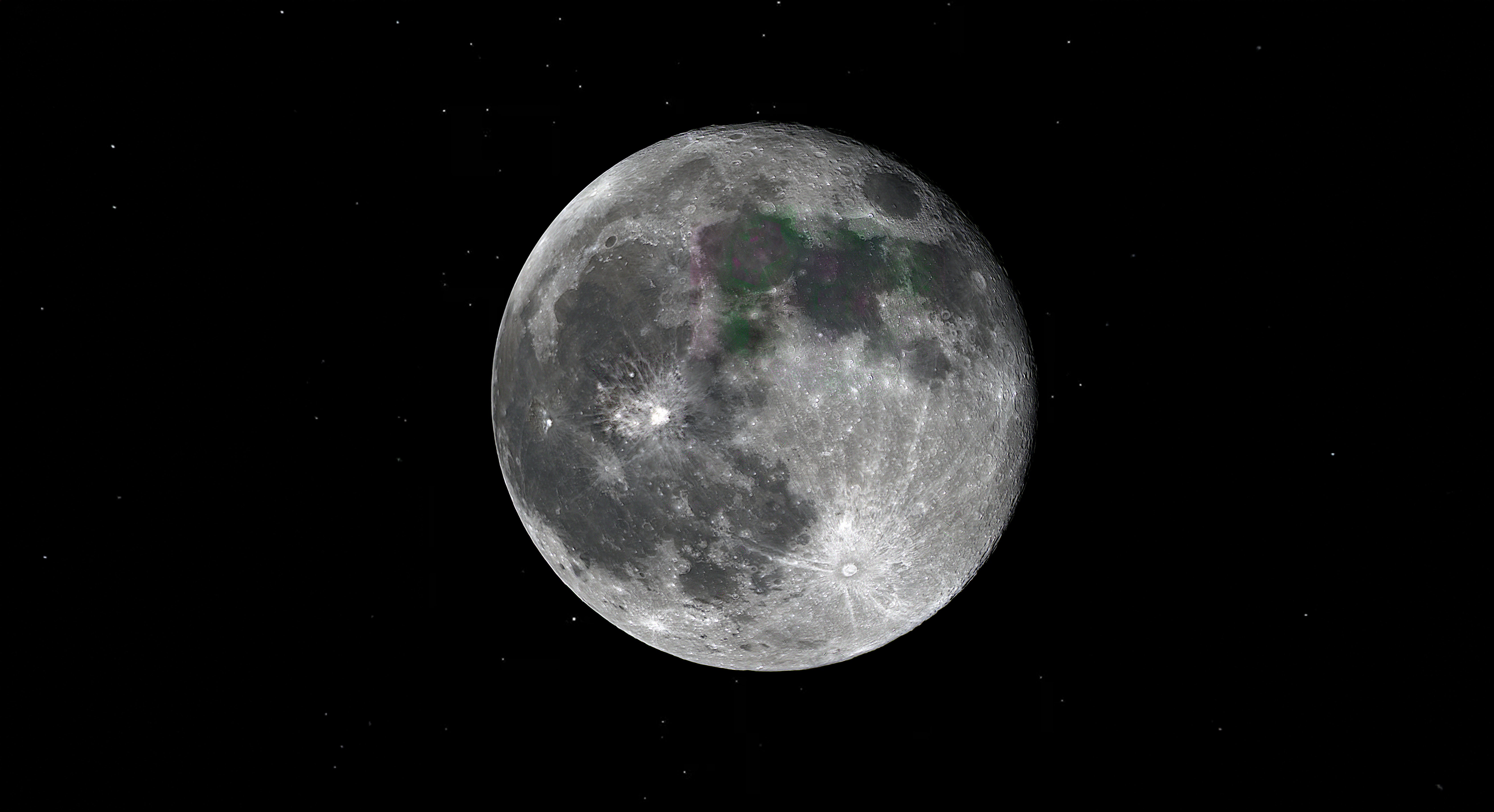
Earth's only natural satellite, the Moon is approximately 384,400 kilometers away from Earth and is the fifth largest moon in our solar system.

Since the first successful human mission to the Moon in 1969, the Moon has been the first and closest world visited by humans outside Earth. Although the Apollo program ended more than five decades ago, returning to the Moon today represents a strategic step toward building the future of human space exploration.
 Geographical proximity
The Moon is only about 384,400 kilometers from Earth, making it relatively close and allowing for emergency supply or rapid return operations, as the Apollo missions demonstrated.
 Short travel time
A trip to the Moon would take only 3 to 4 days, compared to a Mars mission that could take 6 to 9 months using current spacecraft.
 Testing space living technologies
The Moon is a harsh but more manageable environment than Mars, making it a natural laboratory for developing and testing life and bio-support systems.
 An environment suitable for life experiences
The Moon's gravity, which is about 1/6 that of Earth's, provides an opportunity to study the effects of low gravity on living organisms.
The Moon is the ideal launching point for sustainable exploration beyond Earth orbit. It combines its proximity to Earth with environmental conditions that allow for efficient and safe experiments, and serves as a platform for developing technologies that will pave the way for exploration of Mars and beyond.
Icy Water: Scientists have discovered quantities of water ice in the permanently shadowed regions at the moon's north and south poles. These craters are not exposed to sunlight, allowing them to persist for geologically long periods.
Water in lunar soil: Lunar soil contains hydroxyl and water molecules absorbed from the solar wind. These molecules are trapped in minerals on the lunar surface.
Water produced by surface reactions: Sunlight causes reactions between hydrogen from the solar wind and mineral oxides in the soil, forming small amounts of water.
 This image shows the locations of water ice at the Moon's south pole (left) and north pole (right).


