Official government website of the Government of the Kingdom of Saudi Arabia
How to verify
Links to official Saudi websites end with gov.sa

All links to official websites of government agencies in the Kingdom of Saudi Arabia end with gov.sa.

Government websites use the HTTPS protocol for encryption and security.

All links to official websites of government agencies in the Kingdom of Saudi Arabia end with gov.sa.

The BlackHole

The Black Hole

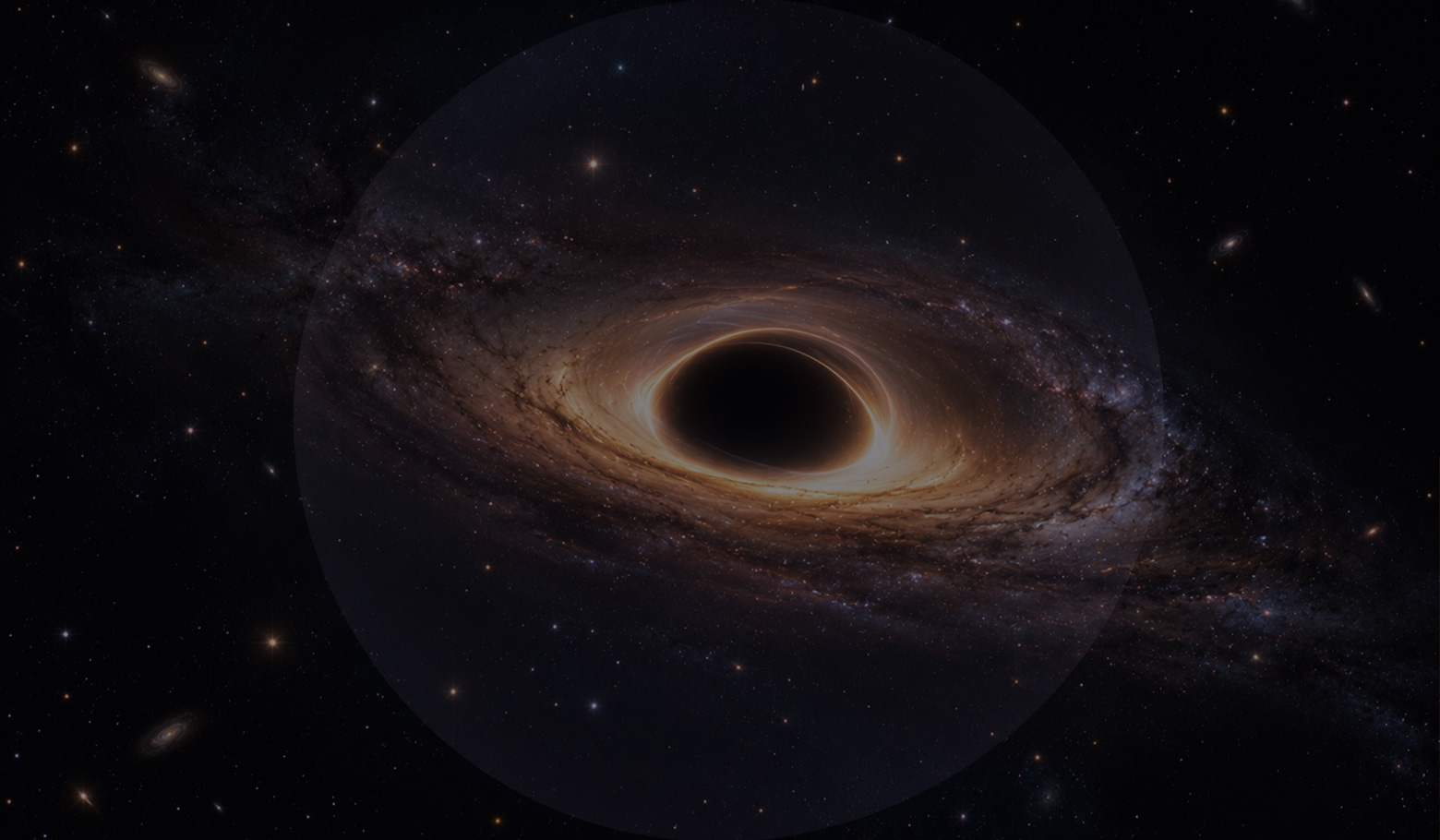
is not a hole in the literal sense. It is a region of space where gravity is so strong that nothing, not even light, can escape after crossing its boundary, known as the event horizon. According to General Relativity, a black hole is predicted to contain a singularity at its center, where matter is compressed to extreme densities and our current theories can no longer fully describe what occurs.

The Black Hole

Typesof Black Holes

Black holes vary in size and mass and are generally classified into several main types based on their mass and characteristics.
Stellar-mass black holes

Stellar-mass black holes

Typically range from a few to tens of times the Sun’s mass. They are found throughout galaxies and generally form from the collapse of massive stars.

Intermediate-mass black holes

Intermediate-mass black holes

Generally range from hundreds to hundreds of thousands of times the Sun’s mass. They bridge the gap between stellar-mass and supermassive black holes and remain rare and difficult to detect.

Supermassive black holes:

Supermassive black holes:

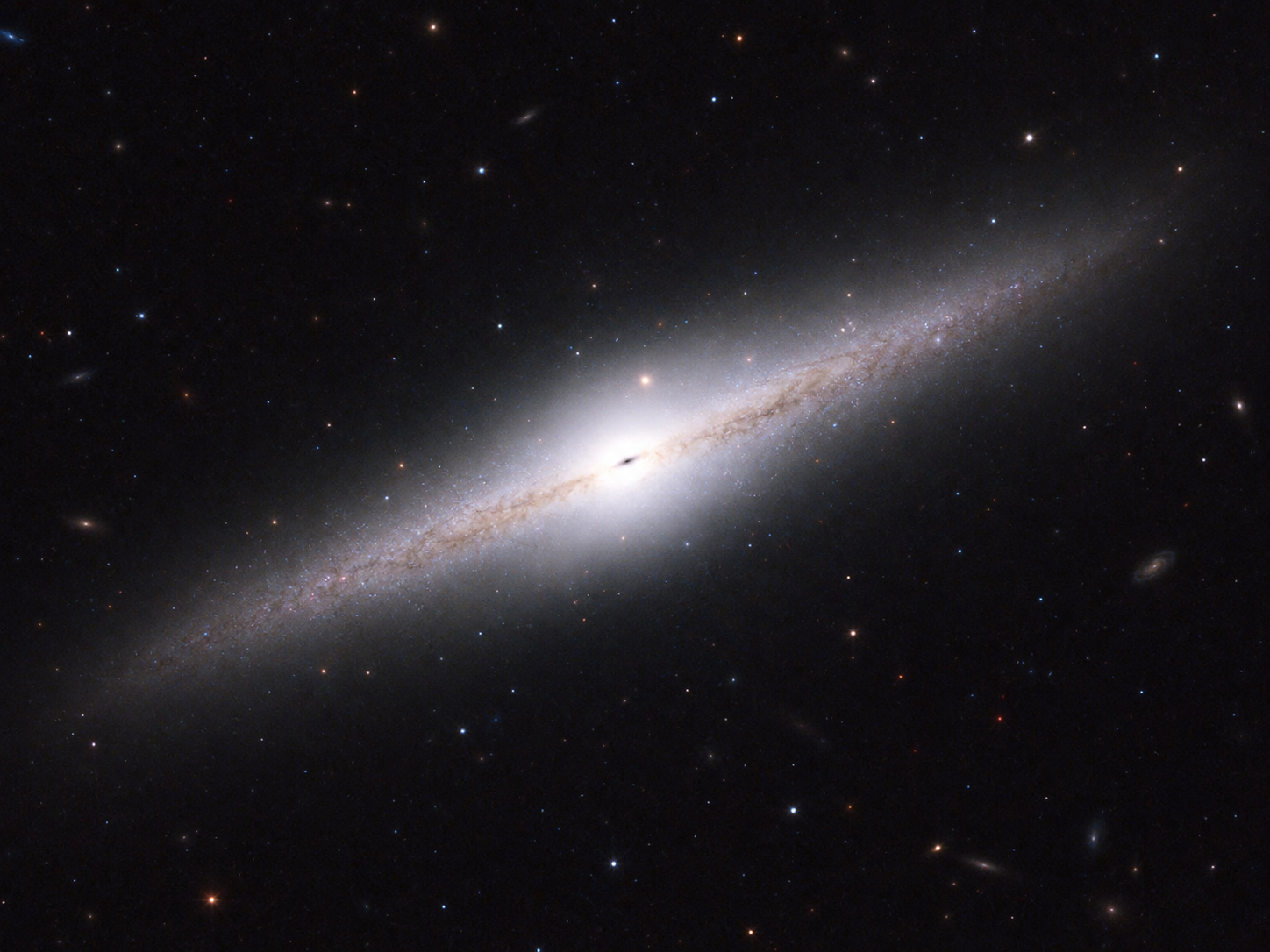
Range from hundreds of thousands to billions of times the Sun’s mass, although their exact lower boundary is not universally agreed upon. They are found at the centers of most large galaxies, including the Milky Way

How Are They Detected?

Black holes themselves do not emit light, so they cannot be observed directly like stars or planets. Instead, astronomers detect them by studying their effects on nearby matter, light, and spacetime.
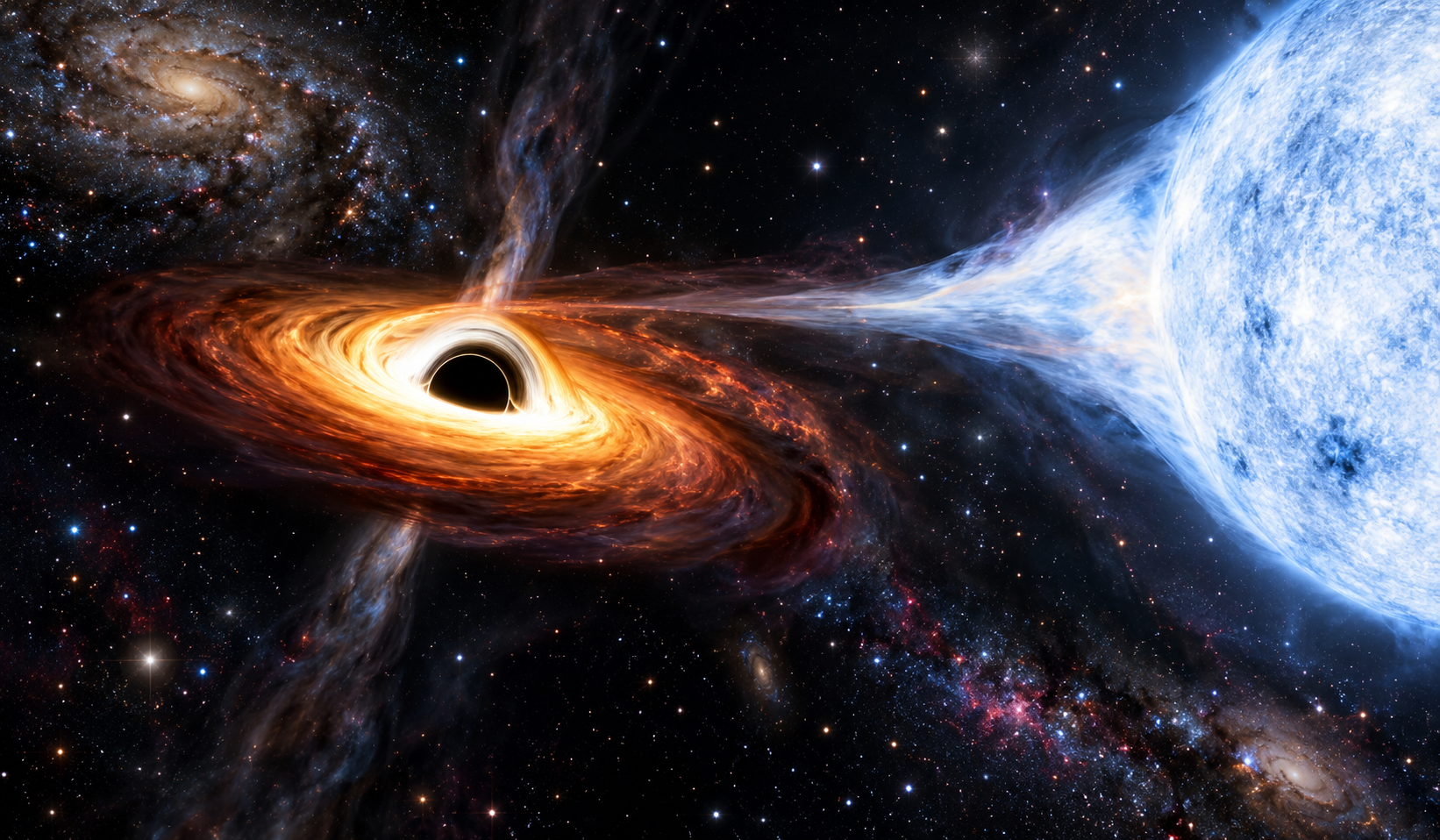
Accretion disks: Gas and dust falling toward a black hole can form a hot, rapidly rotating disk. As this material heats up, it emits X-rays and other forms of electromagnetic radiation that telescopes can detect.

  • Stellar orbits: Astronomers can track the motion of stars orbiting an unseen massive object. By observing stars near the center of the Milky Way, scientists found strong evidence for the supermassive black hole Sagittarius A*. This work was recognized with the 2020 Nobel Prize in Physics.
  • Gravitational waves: When black holes merge, they create ripples in spacetime called gravitational waves. These were first directly detected in 2015 by the LIGO observatories.
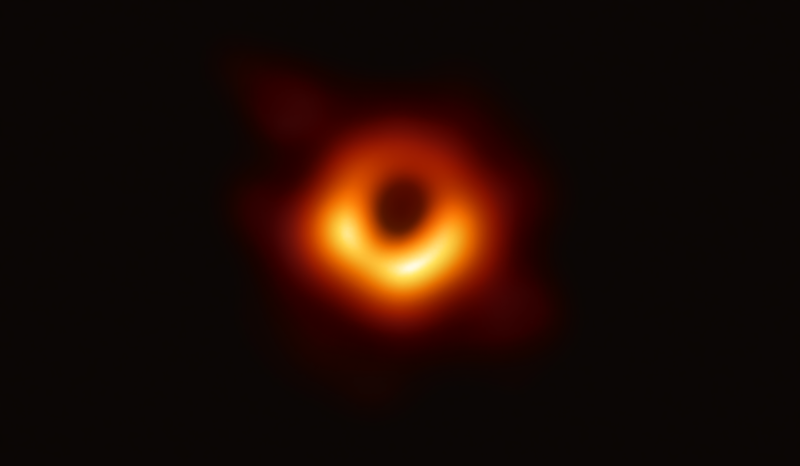
  • Black hole shadows: Using the Event Horizon Telescope, astronomers have imaged the shadow-like regions around supermassive black holes, including M87* and Sagittarius A*.

Black holes

are among the most mysterious objects in the universe. Discover their different types.

Listening to the Text

The text will be read automatically when you click or hover over the word

Cookies

Use of Cookies by this site is just to guarantee Ease of Access and better user experience while browsing. Continuation of your browsing acknowledges your approval for Terms and Conditions of this site and its use of Cookies. POLICIES,TERMS AND CONDITIONS