
All links to official websites of government agencies in the Kingdom of Saudi Arabia end with gov.sa.
All links to official websites of government agencies in the Kingdom of Saudi Arabia end with gov.sa.
Registered with the Digital Government Authority under number :
20250816746
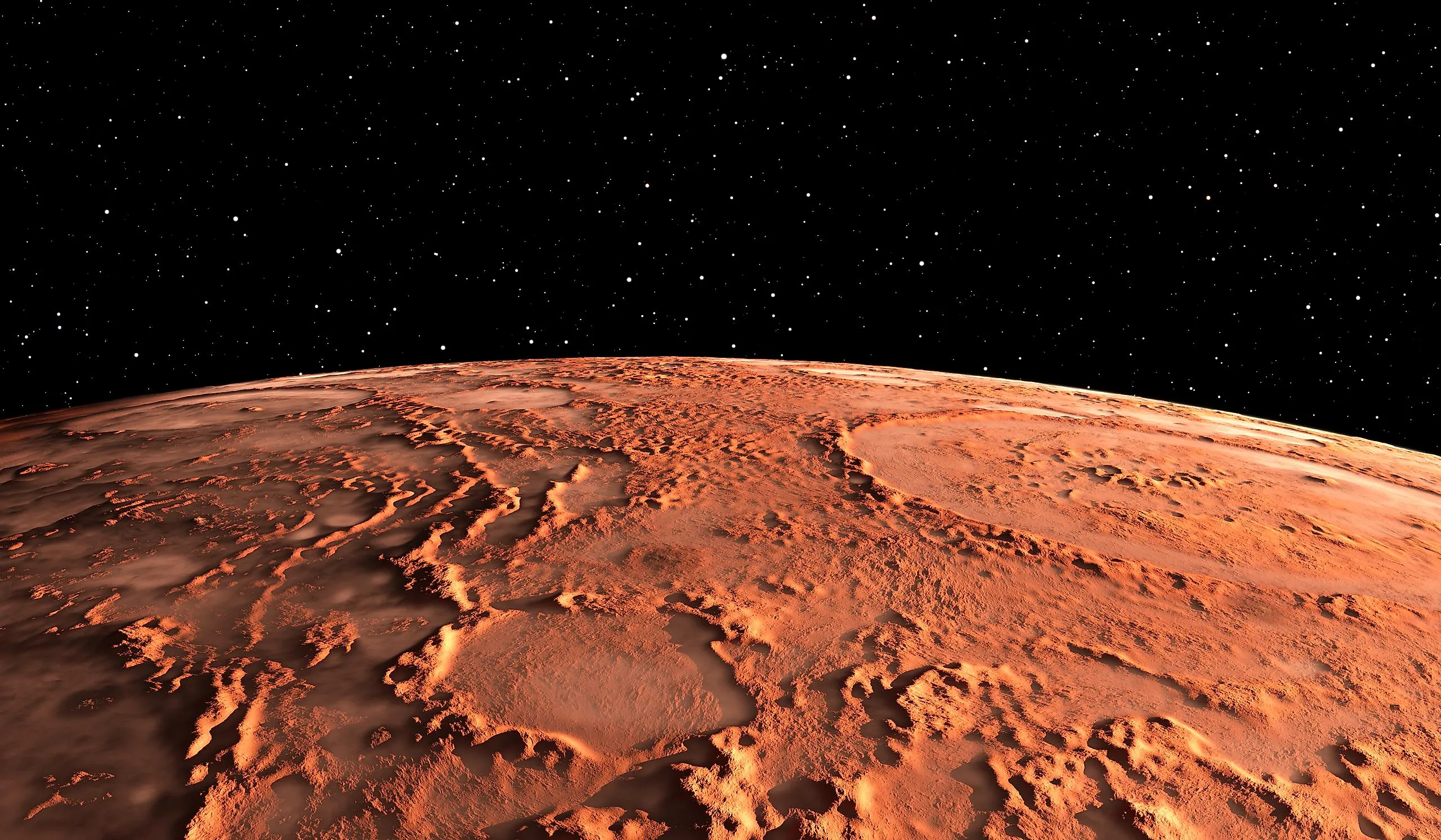
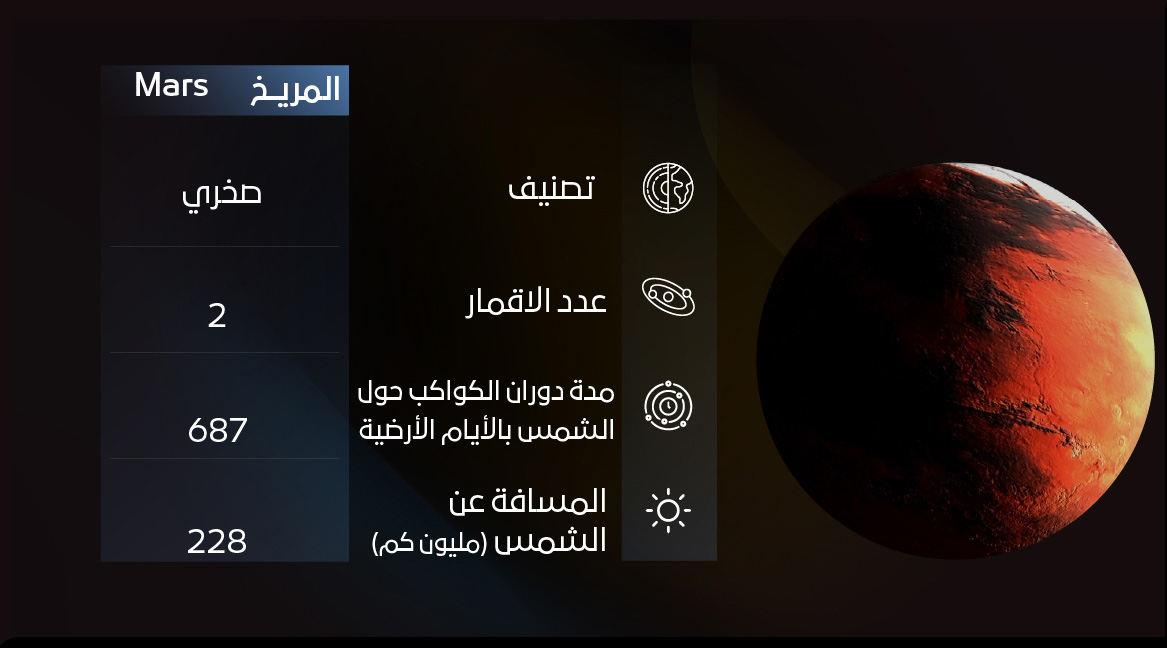
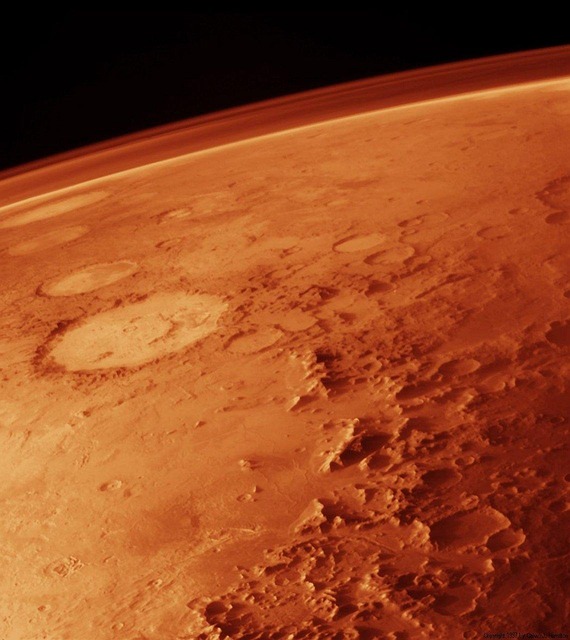
Mars, also known as the Red Planet, is the fourth planet from the Sun in our solar system. It is considered one of the planets most similar to Earth, making it a major focus of interest in space science and planetary exploration.
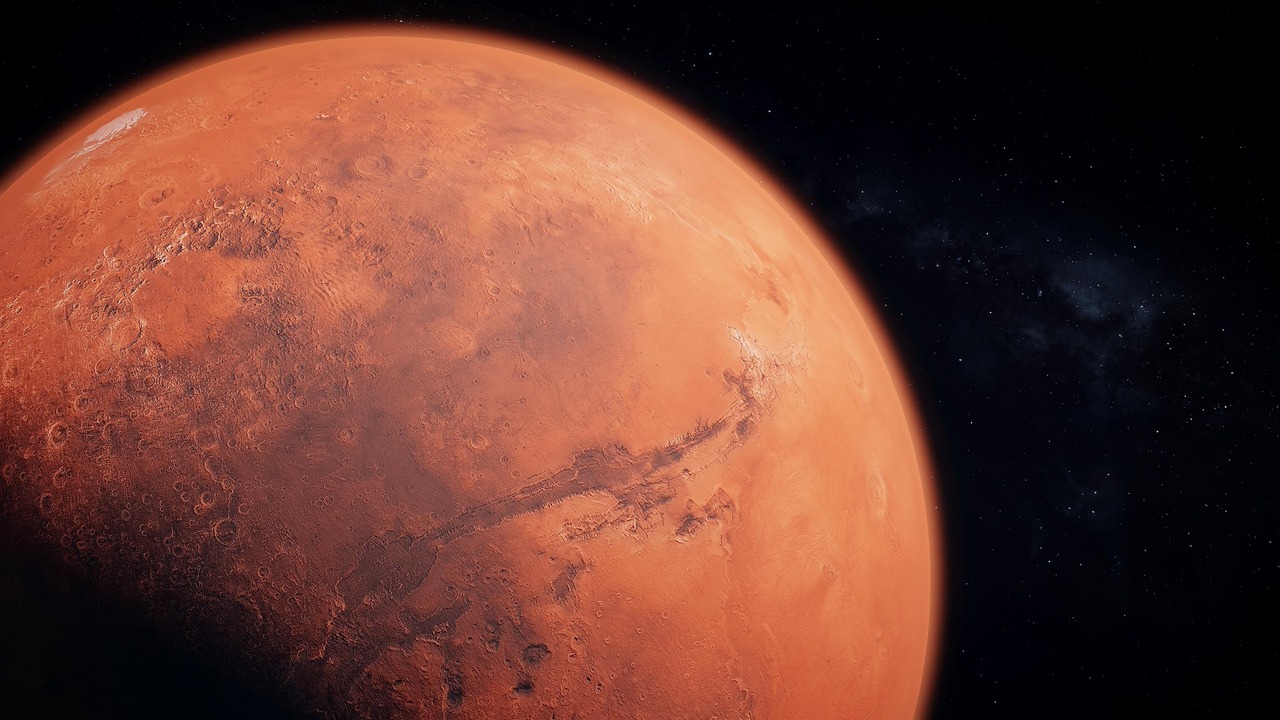
This is due to the presence of iron oxide (rust) on its surface, which gives it a distinctive red color that can be seen even from the ground.
After the Moon, Mars represents the next logical step in human space exploration, given its relative similarity to Earth and its great scientific potential for understanding the history of life and planets.
Living on Mars is no longer science fiction, but the next step in human space exploration.
 The planet most similar to Earth
It has a geological terrain that is relatively similar to Earth.
 The presence of water
Large amounts of water ice have been confirmed at the poles and beneath the surface, raising the possibility of supporting life and fuel production.
 rich geological history
It contains evidence of the existence of ancient water, which may provide a better understanding of planetary evolution and the possibility of the emergence of life.
 Usable resources
The possibility of exploiting water ice to produce oxygen and hydrogen (for fuel and water), and using some local resources for construction, with the need to provide nitrogen from external sources to support agriculture.
Let's learn the difference between living on Earth and Mars.

Learn how sound travels on Mars, why sound might be heard differently there, and what effect the Martian environment has on sound.