


World Space Week, held annually from October 4 to 10 and designated by the United Nations, is the
largest global event dedicated to promoting awareness of space, science, and technology, and their
vital role in advancing humanity and improving life on Earth.
Each year, a new theme is chosen to highlight a specific aspect of the space field, and this
year comes under the title

An awareness booth in a space-inspired setting, featuring a range of activities for visitors of all ages.

An astronomy evening giving visitors the chance to contemplate AlUla’s sky and enjoy an experience inspired by space and the stars.
Monday, 5 October 2026 – Cinema AlJadidah
An astronomical experience in AlUla’s setting, combining sky watching with the beauty of the stars.
Tuesday, 6 October 2026 – Aljoud Farm
An experience combining stargazing with storytelling in an educational, interactive setting.
Wednesday–Thursday, 7–8 October 2026 – AlUla Public Library

A session with Eng. Mishaal Ashemimry
Session Topics
Session language: Arabic
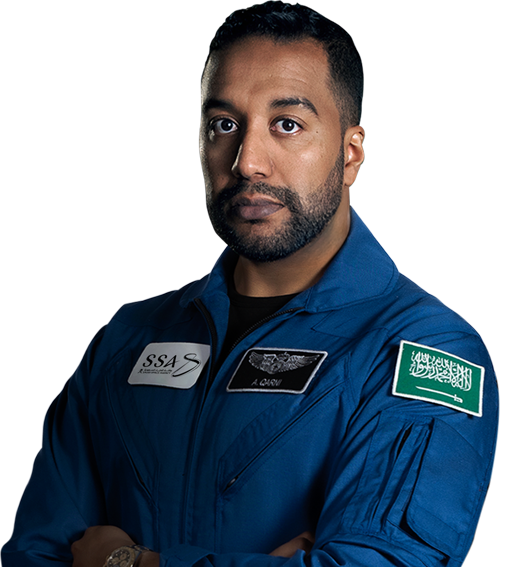
A session with Astronaut Ali AlQarni
Moderator
Astronaut Ali AlQarni

Guest
Cosmonaut Sergei Krikalev
The session will explore the evolution of human spaceflight through personal experiences shared by the astronauts, highlighting their space missions and their perspectives on the future of space exploration.
Session Topics
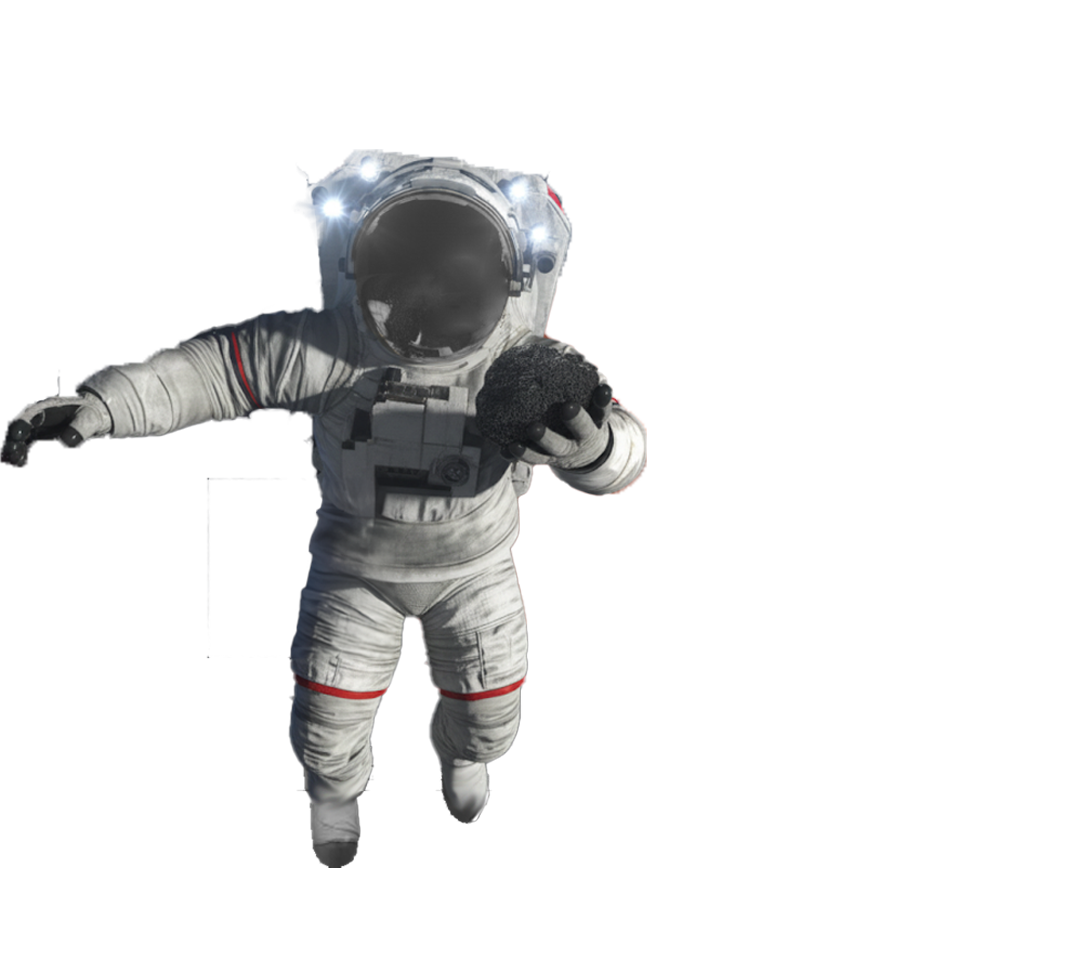
Space exploration missions are conducted to study space and celestial bodies - such as planets, stars, comets, and galaxies - using advanced instruments and technologies. These missions are broadly categorized into manned and unmanned missions, based upon their specific scientific objectives.
Since the dawn of the Space Age, launch vehicles have been our gateway beyond Earth. Today, modern launch technologies are reshaping how we access space—from deploying satellites and scientific missions to developing more efficient and reusable systems—opening new horizons for exploration and innovation.
A launch vehicle is a transportation vehicle designed to generate enough thrust to overcome Earth’s gravity and travel through the upper atmosphere into space. Launch vehicles carry satellites, spacecraft (crewed and uncrewed), and scientific instruments to their designated orbits or destinations.
A launch vehicle begins its journey from a launch pad, where its engines generate the thrust needed to propel it upward. As it climbs, spent stages are progressively jettisoned, reducing the vehicle’s mass and allowing it to continue accelerating until the payload reaches its designated orbit or trajectory.
Reaching space requires overcoming gravity and achieving extremely high speeds. Launch vehicles provide the energy needed to transport payloads from Earth’s surface into space with precision and safety.
Propellants burn inside the engines and produce high-velocity gases, generating a force that propels the vehicle upward in the opposite direction.
The launch vehicle continues to gain speed and altitude as propellant is consumed and its mass gradually decreases.
In multi-stage launch vehicles, sections separate from the vehicle once their propellants are fully consumed, reducing dead weight and maximizing efficiency for the remainder of the journey.
Once the required speed and altitude are achieved, the payload separates from the launch vehicle and begins its mission in orbit or continues toward its intended destination.
Launch vehicles have transformed terrestrial economies, enabled scientific exploration and discovery beyond Earth and allowed human landings on the moon with aspirations to advance crewed exploration of other celestial bodies.
Launch vehicles place satellites into orbit, enabling services such as communications, navigation, Earth observation, weather monitoring, and more.
Launch enables the deployment of telescopes, probes, and scientific instruments to study Earth, planets, stars, and cosmic phenomena.
Launch vehicles are the first step in transporting astronauts and spacecraft to orbit, space stations, and future destinations.
Advances in launch technology help increase the number of missions, reduce costs, and create more opportunities for innovation, services, and commercial activities in space.
Launch vehicles have evolved through continuous improvements in propulsion, guidance, materials, manufacturing, reliability, and operational efficiency, enabling greater payload capacity, mission flexibility, and access to space.
Sustaining human life in space requires advanced technologies that allow astronauts to travel, breathe, and move safely in the harsh environments that would otherwise be uninhabitable without artificial support. The key technologies that support life in space include:
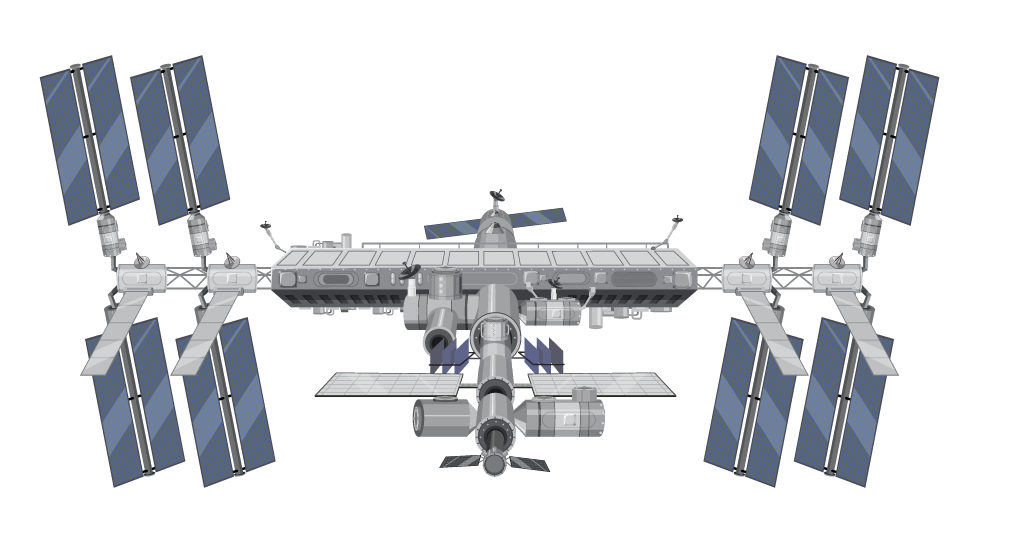
Space stations are advanced structures that orbit Earth or other celestial bodies. Designed as state-of-the-art laboratories, they provide conditions that support human life and enable scientific research. They stand as a major milestone in humanity's pursuit of space exploration and form an essential stepping stone toward future habitation beyond Earth.
The International Space Station (ISS).
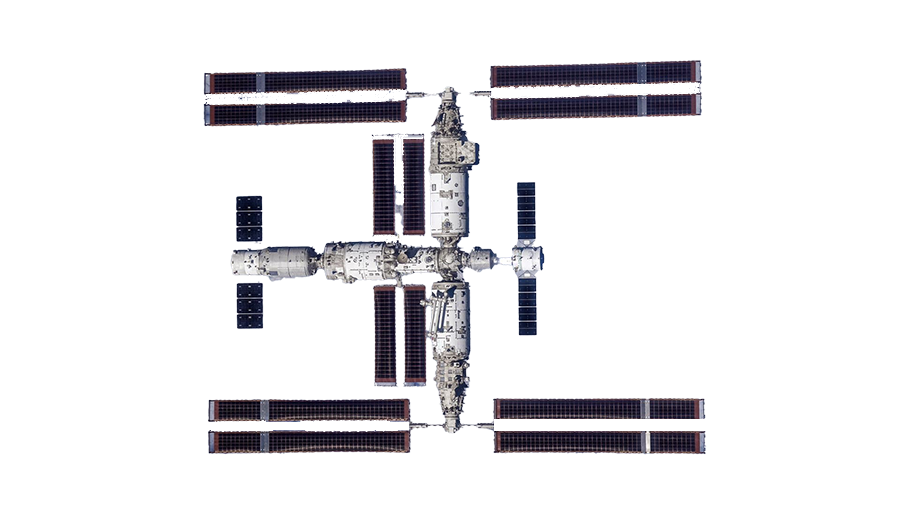 The Tiangong Space Station.
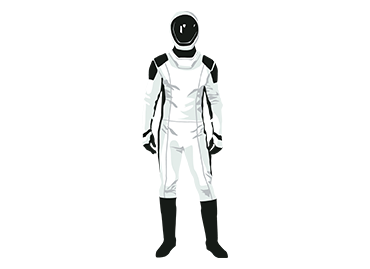
The space suit functions as a mobile personal spacecraft, providing protection and life support during extravehicular activities. It is designed to shield astronauts from radiation and micrometeoroid debris, supply breathable air, maintain a suitable body pressure, and regulate temperature through an integrated thermal control system.
























































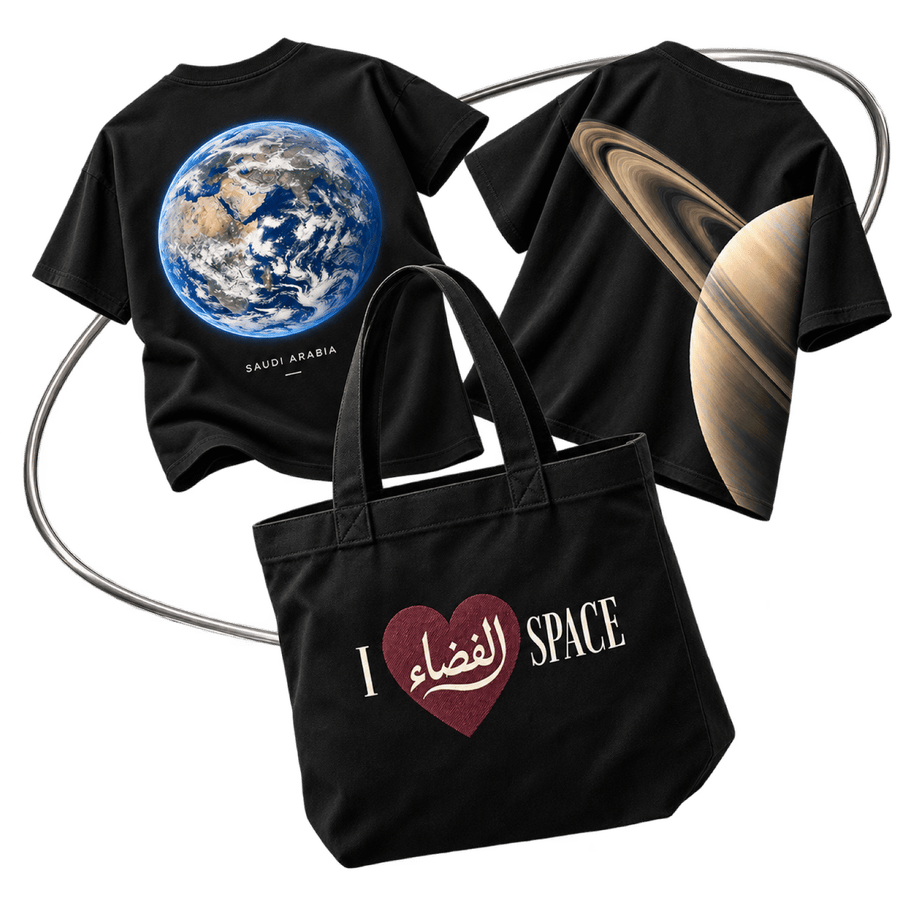
*This link takes you to the Saudi Space Agency’s space store, in partnership with Jahez. For the best experience, open it on your phone.
 up
up
 العربية